
RizzitGO Finds
Spreadsheet
OVER 5000+
WITH QC PHOTOS
Click the images below to browse!






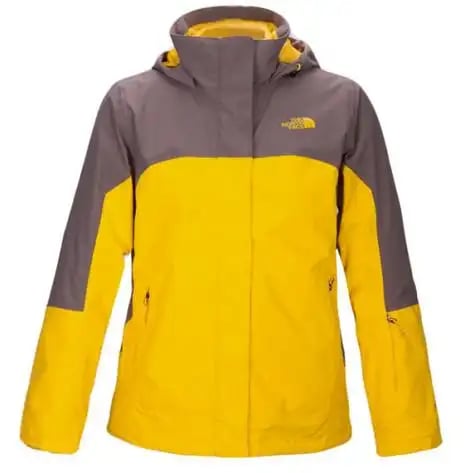


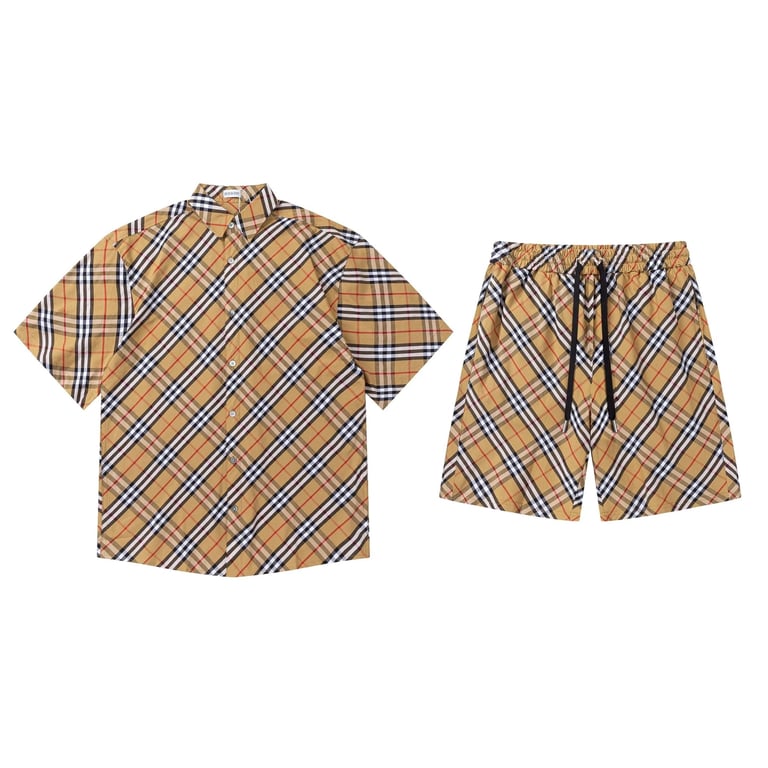


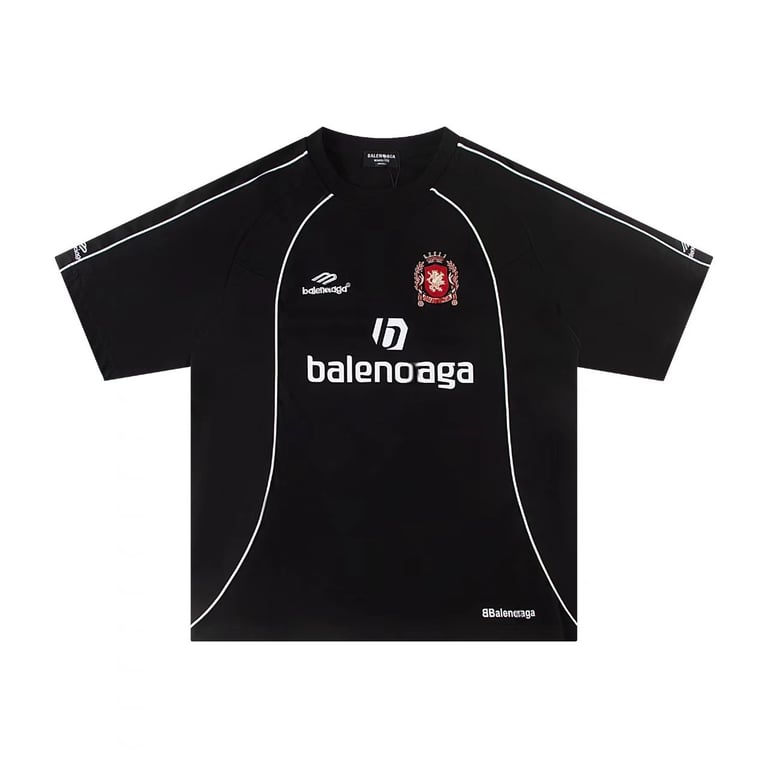
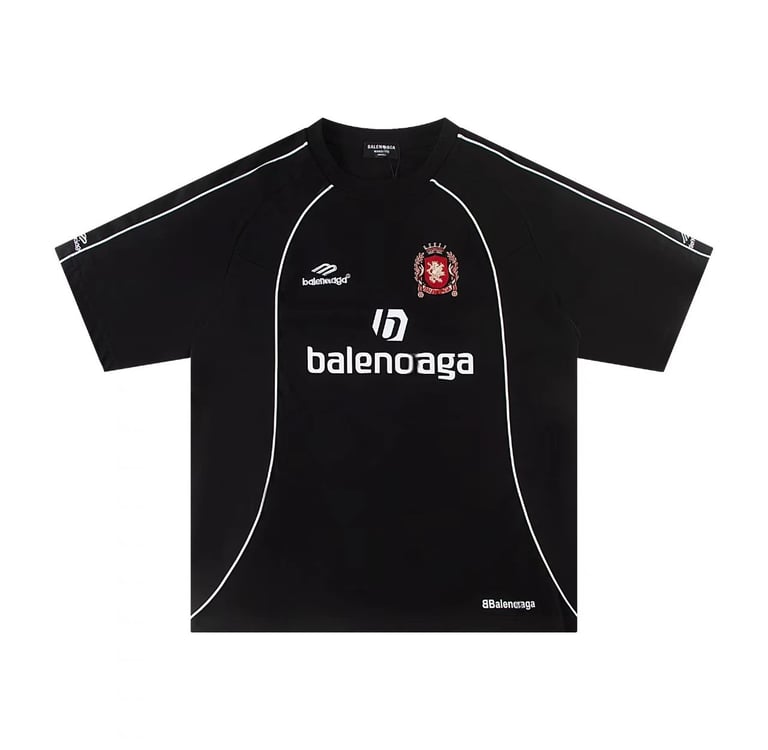



How Rizzitgo spreadsheet tracks fast-moving fashion trends across global markets
In fast fashion sourcing, trends rarely appear as clearly defined “events.” They emerge quietly through scattered supplier activity, inconsistent listings, and repeated design patterns that only become obvious when viewed at scale. The Rizzitgo spreadsheet is built to interpret these fragmented signals and reconstruct how fashion movement actually develops across global markets.
Instead of focusing on what is already trending, the system focuses on how trends begin forming inside supply networks before they reach consumer visibility.
A shifting market where trends are not announced
In most cases, there is no clear moment when a product becomes a trend. A design appears in one micro-store, then similar versions begin appearing elsewhere. Pricing, structure, and presentation may differ slightly, but the underlying idea starts to repeat.
The Rizzitgo spreadsheet captures this early repetition phase and treats it as the starting point of trend formation rather than background noise.
This is where fast-moving fashion actually begins—not in demand charts, but in supply repetition.
How movement is interpreted inside Rizzitgo spreadsheet
Instead of ranking products, the Rizzitgo spreadsheet observes movement patterns across multiple dimensions:
Reappearance across independent sources
When similar items show up in unrelated supplier environments, the system treats it as directional movement rather than coincidence.
Structural replication of design elements
When fashion components (cut, silhouette, material style) begin repeating, the spreadsheet identifies structural alignment forming across listings.
Expansion across micro-categories
When a single style begins spreading into adjacent product categories, it signals early-stage diffusion inside the Rizzitgo spreadsheet tracking layer.
Fashion signals are often invisible at surface level
Most trend systems rely on visible signals like search volume or sales ranking. The issue is timing—by the time those signals appear, the trend is already mature.
The Rizzitgo spreadsheet instead focuses on pre-visibility indicators:
Small clusters of similar designs appearing across suppliers
Early duplication of new styling concepts
Gradual increase in listing density within narrow style groups
Cross-region appearance of similar fashion structures
These signals are weak individually, but strong when aggregated.
Global markets do not move together—they echo each other
One of the key observations inside the Rizzitgo spreadsheet is that global fashion markets do not move simultaneously. Instead, they respond in delayed echoes.
A style may originate in one sourcing region, then reappear in another with slight modification. Over time, these echoes form a pattern of movement that reveals how trends propagate globally.
The system tracks:
First appearance zones
Secondary adoption markets
Variation timing differences
Structural adaptation across regions
This creates a layered map of trend diffusion rather than a flat global ranking.
Why supplier behavior matters more than consumer data
Consumer data often reflects outcomes. Supplier behavior reflects intention.
The Rizzitgo spreadsheet prioritizes supplier-side activity because:
Suppliers respond earlier than consumers
Product replication indicates perceived demand
Variation speed signals confidence in a style direction
Category expansion reveals internal market alignment
In this system, suppliers are treated as early interpreters of demand rather than passive responders.
Filtering real trends from temporary noise
Not every repeated pattern becomes a trend. Some disappear quickly due to promotions, overstocking, or isolated experiments.
The Rizzitgo spreadsheet filters these by checking whether movement:
Continues beyond a single listing cycle
Appears across multiple independent sources
Expands into variations rather than fading out
Maintains structural consistency over time
Only patterns that persist across these dimensions are considered valid trend formation.
Connecting detection to real sourcing behavior
Trend identification alone is not sufficient unless it can be verified in real sourcing environments. This is where Rizzitgo links integrates with the spreadsheet system.
Through Rizzitgo links, users can directly:
Access original supplier listings
Compare identical styles across different stores
Validate whether detected movement exists in real inventory
Confirm whether patterns reflect actual supply activity
This connection ensures that trend analysis remains grounded in executable sourcing paths.
Conclusion
The Rizzitgo spreadsheet tracks fast-moving fashion trends by focusing on how styles propagate through supplier networks rather than how they appear in popularity rankings. It reconstructs trends from repetition, diffusion, and structural alignment across global markets.
Instead of treating trends as finished outcomes, it observes them during formation—when they are still unstable, distributed, and evolving across supply chains.
Combined with Rizzitgo links, this system bridges early signal detection with real-world validation, turning fashion trend tracking into a continuous observation of how global style movements actually emerge and spread.


How Rizzitgo links accelerate access to global trending products
In fast-moving fashion markets, timing is often more important than selection. A product can be correctly identified as a trend, but still lose value if access is delayed. Stock shifts quickly, supplier listings change, and identical items can disappear or fragment across different micro-stores within a short period.
The Rizzitgo links system is designed to shorten the distance between trend detection and actual product access. Instead of requiring users to re-search or rebuild sourcing paths, it creates direct entry routes from structured trend data to live supplier pages.
Access delay is the hidden cost in trend sourcing
Most users assume the main challenge in trend sourcing is identification. In practice, the larger issue is delay between discovery and execution.
After a trend is identified, users typically still need to:
Search again across multiple platforms
Filter similar listings manually
Reconstruct supplier sources
Compare inconsistent product pages
Each step increases the risk of missing the active trend window.
The Rizzitgo links system removes these intermediate actions by directly connecting trend signals to supplier endpoints.
Direct routing replaces repeated search cycles
In traditional workflows, sourcing a trending product often becomes a loop:
search → open listing → return → search again → compare → verify
The Rizzitgo links structure replaces this loop with direct routing:
trend entry → supplier page → comparison
Instead of re-entering search behavior, users move through predefined paths generated from the Rizzitgo spreadsheet.
This significantly reduces time spent rediscovering the same product across different sources.
Faster access improves trend window capture
Trending products have a limited lifecycle window. Early-stage trends often provide the highest sourcing advantage, but this window is extremely sensitive to delays.
With Rizzitgo links, users can:
Enter supplier pages immediately after trend detection
Access multiple sourcing options without navigation resets
Compare variants while the trend is still emerging
Validate availability in real time across stores
This increases the probability of acting within the active trend phase rather than after saturation.
Eliminating cross-store fragmentation in product access
One of the biggest inefficiencies in global sourcing is fragmentation. The same trending item may appear across different micro-stores with inconsistent naming, pricing, or structure.
The Rizzitgo links system consolidates this fragmentation by:
Mapping multiple supplier sources to a single trend entry point
Connecting identical products across different stores
Reducing duplicate searching across platforms
Standardizing access paths for repeated items
Instead of treating each listing as separate, the system treats them as connected access nodes.
From spreadsheet insight to executable sourcing flow
The Rizzitgo links system works as the execution layer of the Rizzitgo spreadsheet. While the spreadsheet identifies and structures trend signals, the links translate those signals into actionable access paths.
This creates a two-layer workflow:
Detection layer (trend identification inside spreadsheet)
Execution layer (direct access through links)
Users do not need to rebuild sourcing logic manually between these layers.
Reducing cognitive load during fast decision-making
Fast-moving trends require fast decisions. However, traditional navigation increases cognitive load by forcing users to repeatedly interpret:
Which supplier is correct
Which listing matches the original trend signal
Whether products are identical or variations
How to compare across inconsistent pages
The Rizzitgo links system reduces this load by pre-aligning destination pages with structured trend data, allowing users to focus on decisions rather than navigation.
Multi-source comparison becomes instant rather than manual
Without structured linking, comparing suppliers requires opening multiple tabs and manually aligning information.
With Rizzitgo links, comparison becomes:
One-click switching between sources
Direct access to equivalent listings
Instant visibility of price and variation differences
Reduced need for repeated search validation
This compresses what was previously a multi-step process into a single continuous flow.
Conclusion
The Rizzitgo links system accelerates access to global trending products by removing search repetition, reducing navigation layers, and directly connecting trend signals to supplier pages. It transforms sourcing from a fragmented discovery process into a structured execution flow.
Instead of spending time locating products after identifying trends, users move directly into validation and comparison, ensuring faster response within short-lived trend windows.